
Explore AI toys
AI plushies with a voice and a character
An AI plushie pairs a stuffed animal with conversational technology. LifeToy provides the hardware and software behind that experience, helping plush manufacturers and character brands develop toys that can listen and talk.
Discuss your toy project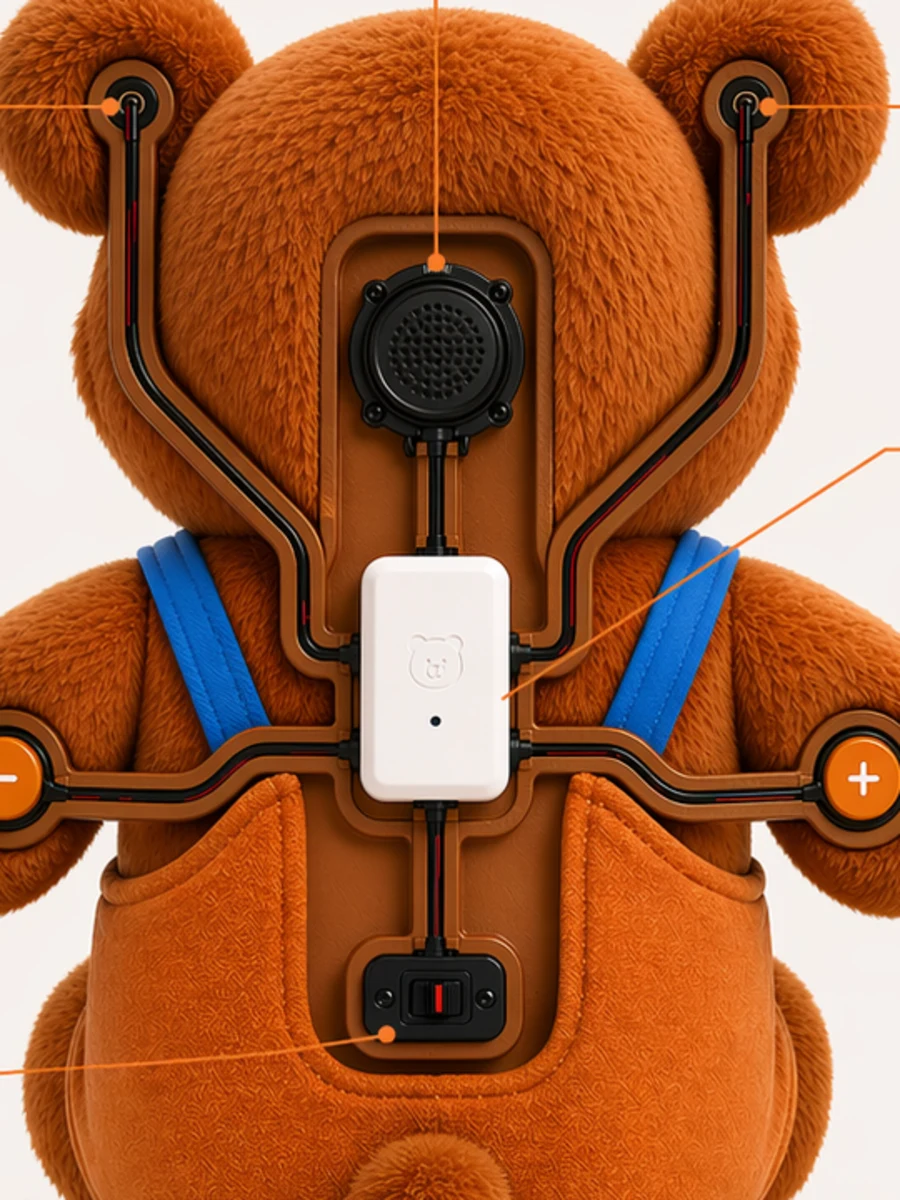
What is an AI plushie?
AI plushies are plush toys or stuffed animals with an AI-powered conversation experience. Instead of only repeating recorded sounds, they can generate a reply to spoken input. The voice and character design turn the soft toy into a physical interface for stories, questions and imaginative play.
An AI teddy bear is one example, but the format can also be a cat, panda, fantasy creature or a brand’s existing character. The outward design gives the toy its identity; the hardware and software make interaction possible.
What goes inside a talking stuffed animal?
A conversational plush toy needs a microphone, speaker, processing and wireless hardware, and a suitable power system. Firmware connects those parts to the voice service. LifeToy’s cloud software, companion app and character tools complete the experience around the physical toy.
Plush integration has specific practical challenges. Filling can muffle a speaker or microphone. Electronics need a secure enclosure and accessible controls. Charging, care instructions and any removable module must be designed for the finished product, rather than assumed from a bare circuit board.
From your plush design to an AI character
For a plush manufacturer, the starting point can be an existing pattern or a new design. For a character brand, it can be a personality, visual identity and story world. LifeToy connects that creative work with hardware integration and the software that runs the character.
An early prototype should answer concrete questions: can the voice be heard through the fabric, can the microphone capture speech, and can a person easily start and stop the experience? Test these together with connection setup, conversation behavior and product care before moving toward production.
A character that is more than a voice
A distinctive AI plushie needs clear character direction: how it introduces itself, the tone it uses and what it should do when it cannot answer. A story-focused bear and a curious cat can share a technology platform while feeling different to talk to.
LifeToy Studio provides the character side of the platform alongside the hardware, firmware, cloud and app. Supported languages and voice behavior should be checked for the intended release. Translating a name or description alone does not establish the quality of a spoken experience.
Frequently asked questions
Are AI plushies the same as talking stuffed animals?
A talking stuffed animal may only play recorded phrases. An AI plushie uses AI to produce conversational responses. Look at the actual interaction, connection requirements and controls to understand what a particular toy offers.
Can an ordinary teddy bear be converted into an AI plushie?
Some plush designs may be suitable for integrating electronics, but this requires a design assessment. Size, materials, enclosure, power and the requirements of the finished toy all matter. LifeToy can discuss a prototype with a manufacturer or creator; universal compatibility is not assumed.
Can we use our own plush character and brand?
LifeToy’s hardware and software platform is intended for brands, manufacturers and creators developing their own toy experiences. Bring your character concept, design constraints and intended audience to a project discussion so the integration can be scoped.
How do I choose an AI plushie for a child?
Review the finished product’s age guidance, privacy policy, conversation controls, charging and care instructions, and any continuing service charges. Ask what happens when the internet or service is unavailable. Do not infer suitability or certification from the use of AI technology alone.