
Explore AI toys
Build your AI toy with LifeToy
Bring your toy design and character. LifeToy brings together the voice hardware, device software, cloud services, companion app and character tools needed to develop a conversational product. Start with a prototype that makes your idea tangible.
Discuss your toy project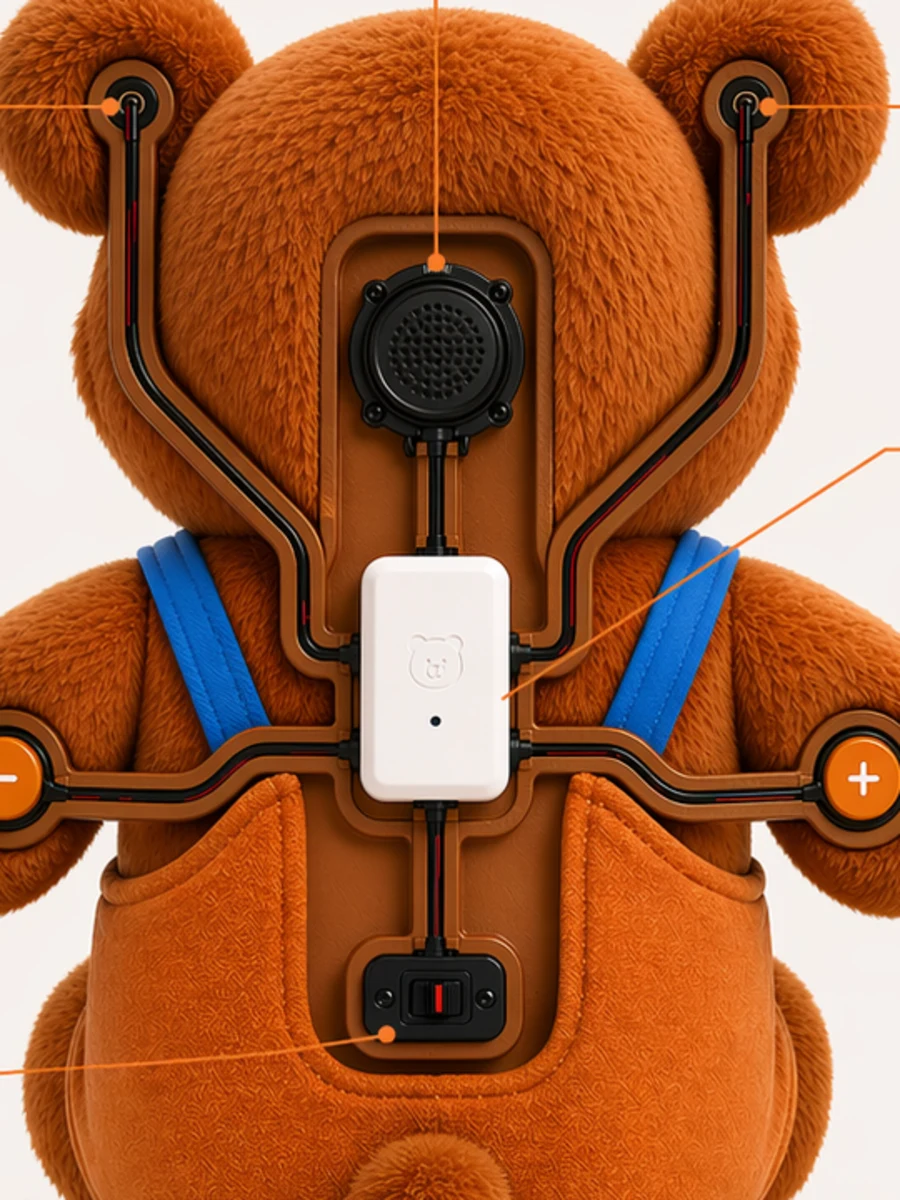
A platform for toy brands, plush manufacturers and character creators
A toy manufacturer starts with materials, patterns and production experience. A character brand starts with a personality, visual identity and story world. Adding conversation connects those disciplines with electronics and a continuing software service. LifeToy provides a shared technical foundation for that work.
The finished product remains a design project: a talking teddy bear, an interactive plush animal and a hard-shell figure have different physical requirements. Bring a drawing, sample or character concept so the hardware fit and intended experience can be discussed together.
What the LifeToy platform brings together
Voice hardware connects the microphone, speaker, processing and wireless communication. Firmware runs on the device and coordinates connection and conversation. Cloud services connect the physical device with its configured voice experience. These layers need to work together when the toy starts, loses connectivity or ends a conversation.
The companion app supports device setup and control. LifeToy Studio provides tools for configuring a character and its presentation. This connects the physical toy to the voice and personality that people meet, rather than treating the electronics and character as separate products.
From an idea to a working prototype
First, describe the audience and a real use case: what should happen when someone picks up the toy, how do they begin speaking, and how do they stop? Choose a small set of interactions that can be demonstrated and evaluated. A story-telling character and a conversational question-and-answer character may need different instructions and controls.
Next, integrate the hardware in the intended shape and test the complete experience. Listen to the speaker through the actual fabric or enclosure, check microphone pickup, try setup on the intended companion device and observe behavior after a connection drops. A successful browser demonstration is useful, but the physical prototype must also be checked.
Your character, voice and target languages
A character brief should explain its name, tone, interests and conversation boundaries. Include examples of how it introduces itself, answers an ordinary question and handles something it cannot answer. Those examples make the intended personality easier to review and improve.
Select the target markets and spoken languages early. Test pronunciation, understanding and responses with speakers of each target language. This website is available in English, German and Simplified Chinese; that describes the website translations, not a guarantee that every voice or finished toy supports those languages.
Plan the product and its ongoing service together
Before a wider release, define the complete hardware, enclosure, power and charging design, the intended age group and the applicable product checks. Also define how people obtain help, manage their device and understand what happens to conversation data. Requirements depend on the finished design and market.
Connected toys also need a service plan: which costs are included, how software is maintained and what happens if connectivity or a voice service is unavailable. Discuss the scope of a prototype and these operating requirements with LifeToy before setting a production schedule or a retail promise.
From the LifeToy app to the Marketplace
You can explore public characters and talk to them in the LifeToy web experience without a physical toy. The mobile app is coming soon to the App Store and Google Play, with character discovery, conversations and pairing for compatible LifeToy devices.
Marketplace sales are planned with business partners. The intended experience combines character conversations and product questions with a choice of plushies with or without compatible LifeToy hardware, depending on each partner’s offering. General retail checkout is not yet available; consult the product listing for its contents and availability when sales launch.
Frequently asked questions
Can we develop an AI toy under our own brand?
LifeToy works with brands, manufacturers and creators on their own toy designs and characters. Share the concept and intended audience so the hardware integration and software experience can be scoped for your project.
Is this a downloadable chatbot or a physical toy platform?
LifeToy connects physical voice hardware with firmware, cloud services, a companion app and character tools. Developing a finished toy requires physical integration as well as configuring the conversation experience.
What determines the price and development schedule?
The scope depends on the toy design, hardware integration, character work, intended markets and the service requirements. Discuss your prototype goals with LifeToy for a project-specific plan; this page does not advertise a universal unit price or release date.
What should we bring to the first project discussion?
Bring the toy or character concept, approximate dimensions, target audience and languages, and a description of the conversation you want to demonstrate. Existing samples and a short list of prototype acceptance goals help make the discussion concrete.