
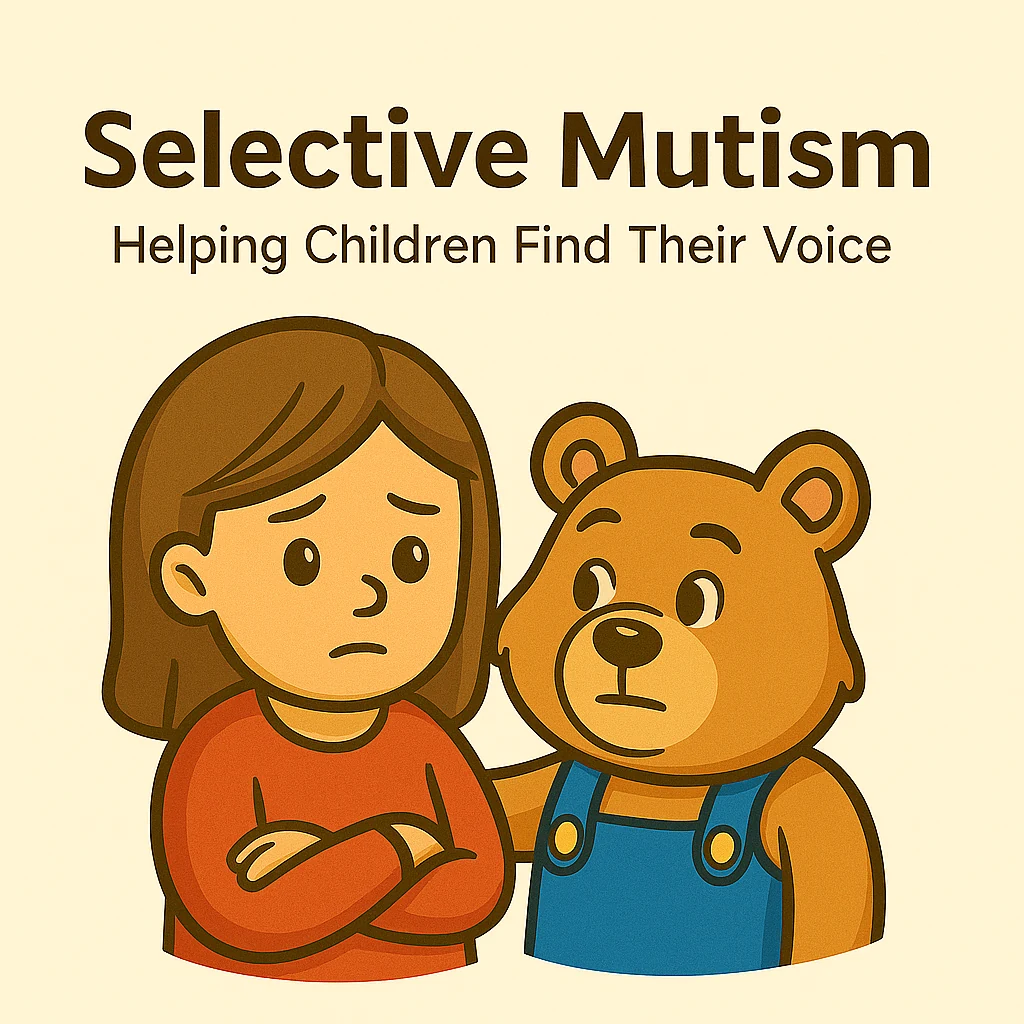
Understanding Selective Mutism in Children
July 10, 2025 · Dr. Ahmad Reza Cheraghi
A clear guide to Selective Mutism — what it is, how it differs from shyness, and why early support is crucial for kids.
🧸 Understanding Selective Mutism in Children
Selective Mutism (SM) is a childhood anxiety disorder where a child is able to speak in some settings (like at home) but remains silent in others (such as at school or with strangers).
It’s not stubbornness. It’s not a speech delay. It’s a form of social anxiety that feels like a “freeze response” — the words are inside, but the fear of speaking locks them away.
🌱 How It Differs from Shyness
Many parents think their child is simply shy. But selective mutism is more intense:
- Shy child: may warm up after some time.
- Child with SM: stays silent for months or years in certain places, even though they want to speak.
This silence can affect learning, friendships, and confidence.
🧩 Causes and Triggers
There isn’t a single cause, but research highlights:
- Genetic predisposition to anxiety.
- Speech/language challenges that make kids self-conscious.
- Traumatic or stressful social experiences.
- A mix of family, temperament, and environment.
🔑 Why Early Support Matters
Without intervention, selective mutism can:
- Delay speech and social development.
- Lower academic performance.
- Lead to social withdrawal or long-term anxiety.
With early support, most children gradually overcome SM. Therapy, safe environments, and gentle encouragement are the keys.
💡 LifeToy’s Vision
At LifeToy, we are building Bearie, an AI-powered companion that helps children with selective mutism:
- Practice speaking safely in small steps.
- Build confidence in a playful environment.
- Track progress over time with parents and therapists.
We believe every child deserves the freedom to express themselves — at home, in school, and in the world.
🚀 Join Us Early
We’re inviting parents, therapists, and schools to join our early access program. Together, we can help children break the silence and find their voice.